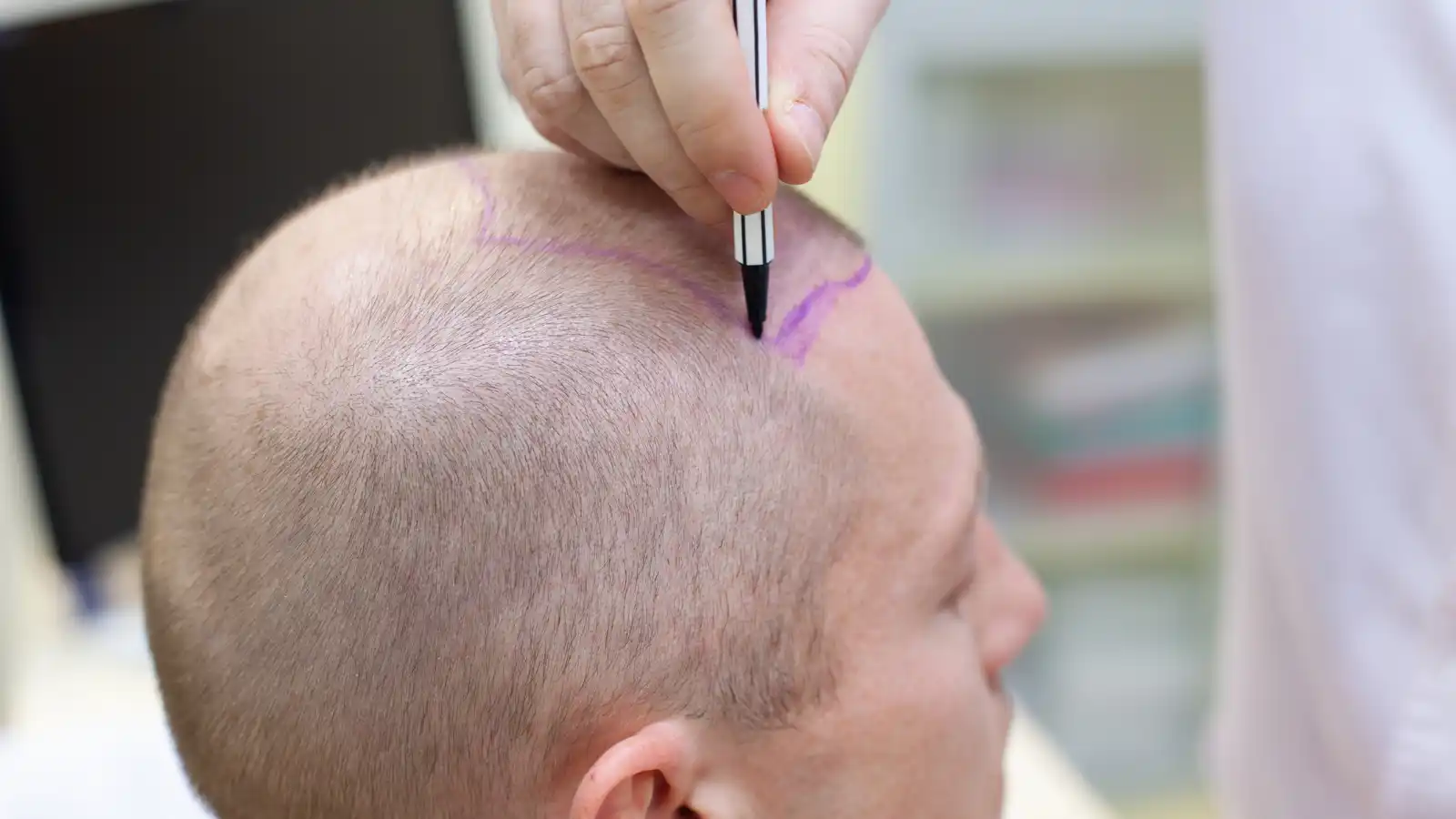
FUE, DHI, or FUT? An honest, plain-English comparison of the three modern hair transplant techniques — scarring, recovery, cost, and which one actually fits your situation.
Most patients researching a hair transplant pick the clinic first and figure out the technique later. That's backwards. The technique determines what your donor area looks like a year from now, how visible the scarring is, how long until you can wear your hair short again, and — quietly — how much the procedure actually costs. Get the technique right, and the clinic decision becomes much simpler.
This guide walks through the three modern transplant methods — FUE, DHI, and FUT — in plain English, then helps you figure out which one fits your hair, your goals, and your timeline. We've kept it North-America-focused: travel windows, recovery realities, and what to expect specifically from clinics in Mexico.
The three techniques in plain English
FUE (Follicular Unit Extraction) is the most common modern technique worldwide. The surgeon uses a tiny circular punch — usually 0.7 to 1.0 mm wide — to extract individual follicular units one at a time from the back and sides of your scalp (the donor area). Those follicles are then implanted into the thinning or balding zones. Because each extraction is a tiny dot rather than a line, FUE leaves no linear scar and you can wear your hair short afterwards. Healing is fast, typically 7–10 days for visible scabbing to resolve.
DHI (Direct Hair Implantation) is a refinement of FUE that uses a specialized tool called a Choi implanter pen. Instead of the surgeon first making recipient incisions and then placing the grafts, the Choi pen loads each follicle and inserts it in a single motion. The promise is denser packing, more precise angle control, and less time the grafts spend outside the body. The technique is particularly popular for hairline work and for patients who want to keep more of the surrounding hair long during surgery.
FUT (Follicular Unit Transplantation), sometimes called the "strip method," is the original modern technique. A surgeon removes a thin strip of scalp from the donor area, dissects it under microscopes into individual follicular units, and implants those grafts into the recipient zone. The donor area is closed with sutures, which leaves a thin linear scar — easily hidden under hair of medium length or longer. FUT often delivers the highest graft counts in a single session and tends to be the most economical per graft.
Head-to-head comparison
| FUE | DHI | FUT | |
|---|---|---|---|
| Donor scarring | Tiny dot scars, invisible at most lengths | Tiny dot scars, invisible at most lengths | Thin linear scar across the back of the scalp |
| Can you shave your head after? | Yes, generally | Yes, generally | Not advisable — scar may show |
| Typical session size | 2,000–4,000 grafts | 1,500–3,000 grafts | 3,000–5,000+ grafts |
| Recovery to "no visible signs" | 10–14 days | 10–14 days | 14–21 days (sutures out at day 10–14) |
| Earliest comfortable flight home | 3–4 days post-op | 3–4 days post-op | 5–7 days post-op |
| Typical cost in Mexico | $3,000–$5,500 | $3,500–$6,000 | $2,500–$4,500 |
| Best for | Most patients, especially those keeping hair short | Hairline work, ethnically diverse hair types, density-focused cases | Advanced loss, high graft counts, budget-conscious patients with longer hair |
A few notes the table doesn't capture. DHI is essentially FUE with a different implantation tool, and some clinics market it as a separate, premium procedure when the underlying surgery is the same — one of many reasons clinic vetting matters as much as technique selection. FUT, despite being the oldest of the three, is not obsolete — it's often the right answer for the right patient, especially for advanced cases where 4,000+ grafts in a single session matter.
Which technique fits which situation
By stage of hair loss
If you're at Norwood 2 or 3 — receding temples or a thinning hairline — you're typically looking at 1,500 to 2,500 grafts. Both FUE and DHI handle this beautifully. DHI's precision is genuinely useful at the hairline, where one-degree differences in angle determine whether the result looks natural or transplanted.
At Norwood 4 or 5 — significant frontal and crown thinning — you're in the 2,500 to 4,000 graft range. FUE is the standard answer here. Some patients combine two sessions spaced 12–18 months apart, which Mexico's lower per-trip cost makes practical.
At Norwood 6 or 7 — extensive loss — you genuinely need 4,000+ grafts, and FUT becomes the most efficient way to get them in one trip. Patients are sometimes steered away from FUT because of the scar, but if you wear your hair longer than a #2 buzz, no one will ever see it. Combination FUT + FUE in one session is also offered by some Mexican clinics for the most advanced cases.
By hair type
Straight, fine hair (common in Asian and Northern European patients) responds well to all three techniques but requires careful angle control — DHI's Choi pen is genuinely advantageous here.
Coarse, wavy, or curly hair (common in Mediterranean, Hispanic/Latino, Middle Eastern, and many mixed-heritage patients) tends to deliver excellent visual density per graft. FUE works exceptionally well, and Mexican clinics have particularly strong experience with this hair type given their patient demographics.
Tightly coiled hair (common in African and African American patients) involves curved follicles below the skin, which makes extraction technically harder and the transection risk higher. This is a case where surgeon experience matters far more than the brand name of the technique. FUT is sometimes preferred for these patients specifically because dissecting grafts from a strip under a microscope can result in lower transection rates than blind punch extraction. Ask any clinic you're considering how many patients with your specific hair type they treat per year.
By lifestyle and hair preference
Planning to keep your hair short — buzzed, faded, or shaved — for years to come? FUE or DHI. Full stop. A linear scar will eventually show.
Comfortable with hair at least an inch long across the back of the scalp? FUT is on the table, and you'll often get more grafts for less money.
Need to be back at work and on camera within ten days? FUE or DHI, and schedule your trip carefully — see our trip planning guide for what to expect each day.
By budget
We've published a full cost breakdown, but the headline math: FUT in Mexico is typically the lowest cost per graft, FUE sits in the middle, and DHI commands a premium of roughly 15–25% over standard FUE. For most patients, the technique should be chosen first and the cost difference accepted, not the other way around — but if budget is genuinely the deciding factor and FUT works for your hair length, it's a perfectly legitimate path.
What Mexican clinics tend to do differently
A few patterns are worth knowing as you compare quotes from clinics in Mexico vs. clinics elsewhere:
Surgeon-led extraction. At top Mexican clinics, the board-certified surgeon performs the extraction phase personally rather than handing it to a technician. This matters more than the technique itself — a doctor-led FUE will usually outperform a technician-led DHI. (Here's how Mexico's medical regulations actually work, and what to ask about credentials.)
Conservative donor harvesting. Mexican surgeons tend to extract fewer grafts per session than the high-volume Turkish norm, preserving donor density for future procedures. If you might want a second session in five or ten years, this matters more than most patients realize at the time of booking.
Realistic graft counts. If a clinic quotes you "5,000 grafts FUE in one day," ask hard questions. Beyond roughly 3,500–4,000 FUE grafts in a single session, transection rates climb and donor area damage compounds. A clinic that says "we'd recommend splitting this into two sessions" is usually the more honest one.
Bundled aftercare. Most reputable Mexican clinics include six to twelve months of post-op follow-up via video call. This is a real advantage over flying further afield, and worth asking about explicitly before you put down a deposit.
A short pre-consultation checklist
Before your free consultation — wherever you book it — have these answers ready. They'll change which technique the surgeon recommends:
- Your age and how long you've been losing hair (active loss vs. stable)
- A few photos: top of head, hairline, sides, and back of scalp, in good light
- Your family history of hair loss (especially maternal grandfather and father)
- Whether you currently take finasteride, dutasteride, or minoxidil
- The shortest hair length you'd want to be able to wear comfortably
- Any previous procedures, including PRP or scalp micropigmentation
- Your realistic time window for the trip and recovery
A good surgeon will use this to recommend a technique, a graft count, and — sometimes — to tell you that you're not yet a good candidate and should wait or try medical therapy first. That last answer is the most useful one a clinic can give you, and one of the clearest signs you've found the right place.
Final thoughts
There isn't a single best technique — there's a best technique for you, given your hair, your timeline, and how you want to wear your hair for the next twenty years. For most North American patients with moderate hair loss who keep their hair short, FUE is the default and DHI is a worthwhile premium upgrade for hairline work. For more advanced loss, FUT remains the most efficient and economical option, and the scar is genuinely a non-issue at most hair lengths.
The cost difference between Mexico and clinics back home means you have room to choose the right technique rather than the cheapest one. That's the real value of going abroad — not just saving money, but being able to afford the procedure your specific situation actually calls for.
Ready to figure out which technique fits you? Book a free consultation and we'll match you with vetted Mexican clinics offering the technique that's right for your case.